The California foreclosure process, explained calmly
Foreclosure in California is nonjudicial, slow, and full of exit ramps. This page walks the statutory timeline and your rights at each stage, with San Diego County specifics. It is a summary, not legal advice; every homeowner in this situation should talk to a free HUD-approved counselor and, where legal questions exist, an attorney.
The timeline
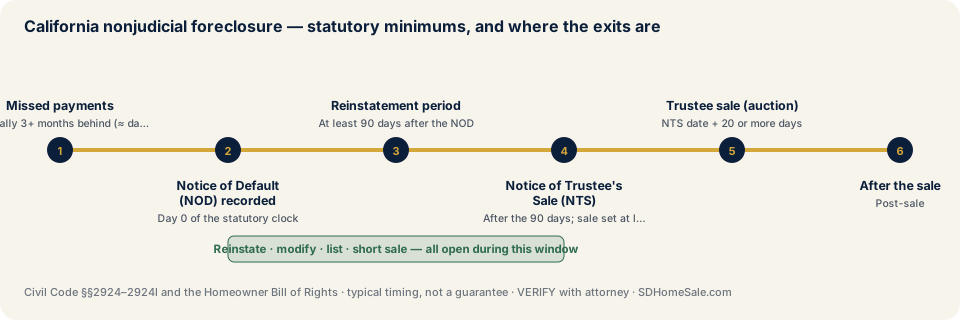
- 1
Missed payments Typically 3+ months behind (≈ day 90+) before a lender may record a default
Under the California Homeowner Bill of Rights the servicer must contact you about loss-mitigation options at least 30 days before recording a Notice of Default.
- 2
Notice of Default (NOD) recorded Day 0 of the statutory clock
Recorded with the San Diego County Recorder. You may reinstate by paying the past-due amount plus allowed fees — not the full balance.
- 3
Reinstatement period At least 90 days after the NOD
No sale can be scheduled during this window. This is the period to list, negotiate, pursue a modification, or consult a HUD-approved counselor.
- 4
Notice of Trustee's Sale (NTS) After the 90 days; sale set at least 20 days later (commonly ~21)
Posted, mailed, and published. The reinstatement right generally continues until 5 business days before the sale date.
- 5
Trustee sale (auction) NTS date + 20 or more days
Sold at public auction — in San Diego County typically on the steps at the East County Regional Center in El Cajon or by online trustee — or reverts to the lender. Postponements are common.
- 6
After the sale Post-sale
Occupants receive notice before any eviction; tenants have additional protections. A deficiency generally cannot be pursued after a nonjudicial sale on a purchase-money loan. Eligible bidders may have a post-sale window to submit offers under SB 1079 (VERIFY current law).
California nonjudicial foreclosure (Civil Code §§2924–2924l, Homeowner Bill of Rights). Timing is typical, not guaranteed; VERIFY with attorney. Full guide: the California foreclosure process.
Your rights at each stage
Under the California Homeowner Bill of Rights (HBOR), the servicer must contact you (or diligently try) at least 30 days before recording a Notice of Default to discuss options, and must give you a single point of contact. Dual tracking — foreclosing while a complete modification application is under review — is prohibited.
Right to reinstate: pay the arrears plus allowed costs and the loan is current. No sale can be scheduled. You may request a modification, forbearance, or short-sale review; a HUD-approved counselor helps at no cost.
Reinstatement right continues until 5 business days before the sale. You may also pay the loan in full (redemption) up to the sale. Sales are frequently postponed; ask the trustee for the current date.
Tenants have post-sale protections (notice periods under state law). Under SB 1079, eligible owner-occupant bidders and certain entities may have a 45-day window to match or exceed the winning bid after the sale (VERIFY current provisions). Deficiency judgments are generally barred after a nonjudicial sale on purchase-money loans.
Homeowner Bill of Rights (Civ. Code §2923.4–2924.20), SB 1079 (Civ. Code §2924m). VERIFY with attorney.
San Diego County specifics
- Notices of Default and Trustee's Sales are recorded with the San Diego County Recorder / Assessor / Clerk; you can look up your own property's recorded documents (VERIFY access method).
- Trustee sales in San Diego County are commonly conducted at the East County Regional Center in El Cajon or via online auction platforms, depending on the trustee (VERIFY).
- Free, local HUD-approved counseling agencies serve San Diego County; start at the HUD locator or call (800) 569-4287. The San Diego County Bar Lawyer Referral Service is at (619) 231-8585 (VERIFY).
- Legal Aid Society of San Diego handles some foreclosure matters for income-qualified homeowners (VERIFY eligibility).
Ten ways this can go
Presented neutrally. Most homeowners who act in the 90-day window end up with one of the first five.
Reinstate the loan
Pay the past-due amount plus allowed fees to bring the loan current. In California you generally keep this right until five business days before a trustee sale. Often funded by savings, family, or a sale of another asset.
Often fits: A temporary hardship that has passed and the arrears are reachable.
Loan modification (through your servicer)
Your servicer may be able to change the loan terms — rate, term, or adding arrears to the balance. The Homeowner Bill of Rights requires them to review a complete application before proceeding to sale. A HUD-approved counselor can help you apply at no cost.
Often fits: Income has recovered enough to carry a modified payment.
Forbearance (through your servicer)
A temporary pause or reduction in payments, with the missed amount repaid or deferred later. Ask your servicer directly — terms vary by loan type and investor.
Often fits: A short, defined hardship (medical, job gap, disaster).
Refinance (with a lender of your choosing)
Replacing the loan may lower the payment or pull equity to cure arrears. Whether it is possible depends on your credit, equity, and the lender — this site does not offer financing; speak with your lender.
Often fits: Substantial equity and a credit profile a lender will work with.
Sell traditionally (list on the open market)
Even on a short timeline, a well-priced listing in San Diego County usually brings the highest net. With a Notice of Default recorded you generally still have 90+ days before any sale can be scheduled — enough to market properly.
Often fits: Equity, time to show, and a home that presents reasonably.
Sell fast / cash offer
A direct sale to an investor or cash buyer, often as-is, closing in days to a few weeks. Faster and simpler — and typically below market value. Always compare it to a listing net sheet before signing anything.
Often fits: Tight deadlines, heavy repairs, or a need to leave quickly.
Short sale
If you owe more than the home is worth, the lender may approve a sale for less than the balance. It takes lender cooperation and time; credit impact is usually less severe than a completed foreclosure. Tax consequences may apply — ask a CPA.
Often fits: Negative equity with a genuine, documented hardship.
Deed-in-lieu of foreclosure
Voluntarily transferring the home to the lender to avoid the auction. Lenders usually require a marketing attempt first; the credit impact is serious but often less than a foreclosure sale.
Often fits: No equity, no buyer, and a lender willing to accept it.
Bankruptcy consultation (with an attorney)
A Chapter 13 filing can stop a trustee sale and allow arrears to be repaid over time; Chapter 7 pauses it. This is an attorney conversation — not something to decide from a website.
Often fits: Multiple debts, or a sale date that is days away.
Do nothing
The home proceeds to trustee sale; any equity may be lost to fees and auction pricing, and the foreclosure stays on your credit for years. Every other option on this list is likely better than this one — including a single phone call to ask questions.
Often fits: No one — this is the outcome to avoid.
Your protections under California law. If your home has a Notice of Default recorded and someone offers to buy it, Civil Code §1695 (the Home Equity Sales Contract law) gives you specific rights — including a written contract in plain language, a five-business-day right to cancel, and a ban on unfair or unconscionable terms. Civil Code §2945 regulates "foreclosure consultants" who charge for help: they must give you a written contract and a three-day cancellation right, and may not take an interest in your home. Any cash offer or rescue service that rushes you past these rights is a red flag. VERIFY with attorney — summary only, not legal advice.
Free help: a HUD-approved housing counselor can review your options at no charge — call (800) 569-4287. Where legal questions exist, consult an attorney; the San Diego County Bar's Lawyer Referral Service is at (619) 231-8585 VERIFY. Kiri is a licensed real estate broker, not a lender, attorney, or foreclosure consultant; for financing questions, speak with your lender. This page does not guarantee any outcome.
Foreclosure questions
How long does foreclosure take in California?
Can I sell my house after a Notice of Default?
What is the difference between reinstatement and redemption?
Will I owe money after a foreclosure?
Related: Behind on payments · Short sale · Sell-fast hub · County hub
A listing net sheet and a cash offer — so you can decide with both in hand.
No obligation, no countdown. If reinstating or modifying is the better path, I will say so.